Plant Wisdom · 4 min read
What makes urucum the seed of the sun?
By Kristi · June 18, 2026
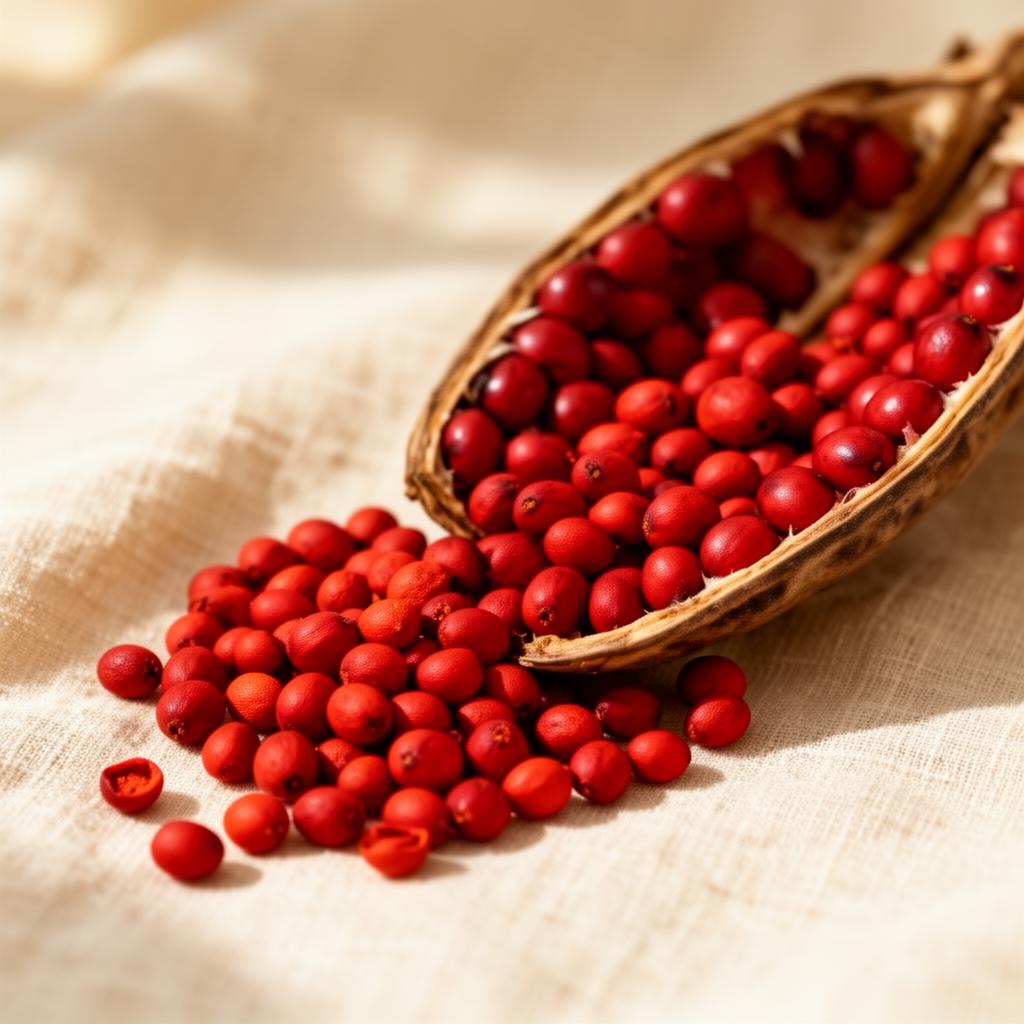
There's a small seed in the Amazon that the forest treats almost like a coal from a slow-burning fire. It's called urucum, and once you crack open its bristled red pod, you understand why Indigenous families have leaned on it for centuries. The seeds bleed a deep, sun-warmed pigment, somewhere between terracotta and ember, and that pigment doesn't just stain skin. It protects it, marks it, blesses it.
Brazilians grow up around urucum in quiet ways. It's brushed into stews, dabbed onto cheeks for ceremony, mixed into oils that elders carry to the river. It's both food and skincare and language. When a grandmother rubs urucum-stained fingers across a child's forehead before they head into the sun, she isn't performing a trend. She's continuing a conversation with the plant that's been going on since long before anyone wrote anything down.
What makes urucum so special, botanically, is its concentration of bixin, a carotenoid the seed produces to shield itself from the equator's relentless light. Carotenoids are nature's own UV strategy: pigments that absorb and disperse intense radiation so the cells underneath can keep doing their quiet work. When we infuse urucum into a body oil, we're borrowing that same intelligence. The seed has been figuring out how to handle the sun for far longer than any lab.
Want more? Explore the Stillness Portal.
Enter the Portal